Prototypes
In class on 2-14, we had a little wine and cheese to help us get through prototyping. (Well, we really had the wine and cheese to sort of make up for the fact we had to have class on Valentine’s Day.)
In any case, the first lo-fidelity prototype is always a good indicator of where the students are in understanding the concepts we’ve talked and read about, and in understanding the goals of the assignment. Since we’re kind of at the mid-point of the term, the prototype exercise is helpful from an instructor standpoint on determining what areas we may need cover a little more.
Here are some of the prototypes.
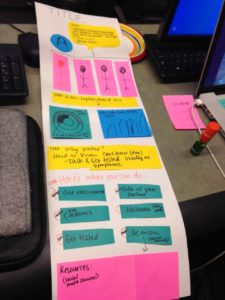
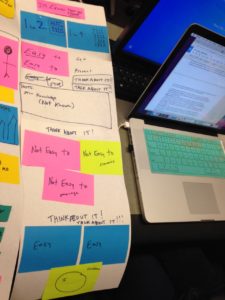
This group is a group of four so for the prototyping I had them split into two groups of two. The two versions actually have a lot of potential when the ideas are considered together. In other words, Figure 2 as developed visually, but it had a great idea for a theme that could be used to tie the whole thing together. Figure 1 incorporates some really strong ideas on visual features and specific topics that need to be included.
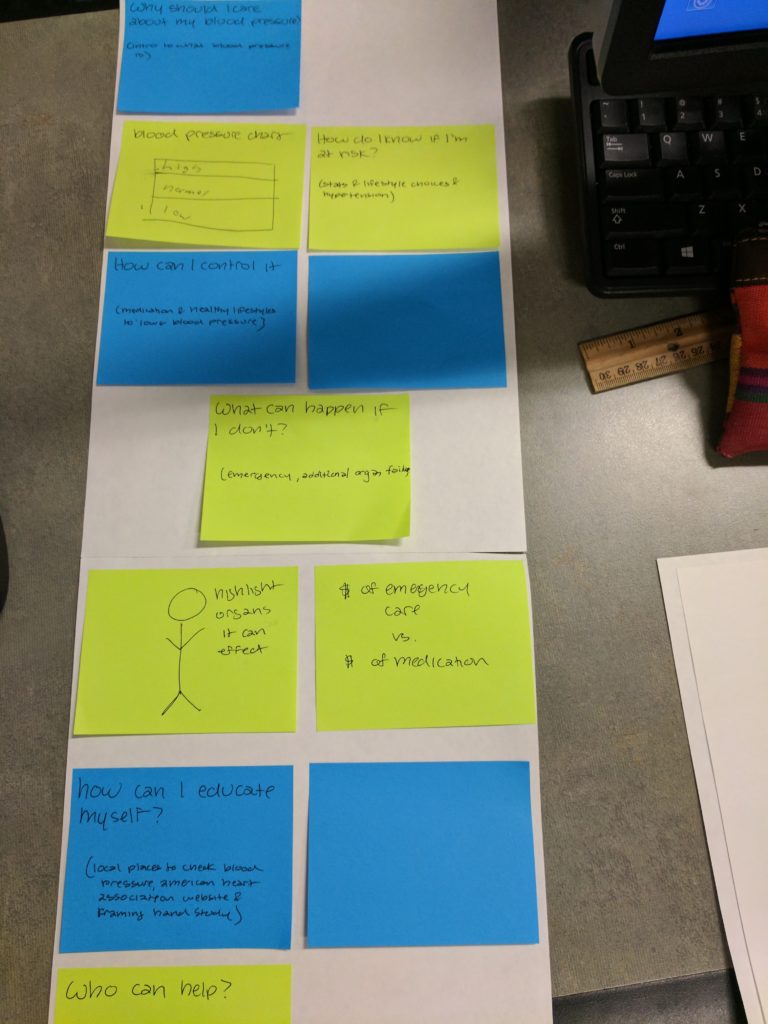
The process of developing Figure 3 helped the students understand where the gaps were in their thinking about the assignment and it’s overall purpose. Thus the blank areas and post its. You can see that they have included topics and ideas of what information needs to be included, but it lacks a design theme or other information on design elements.
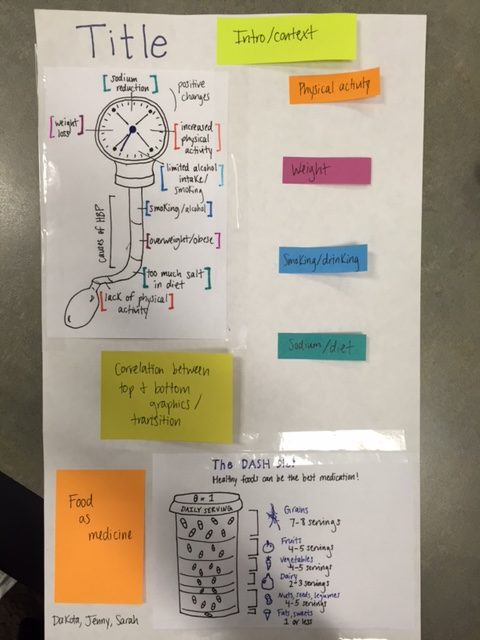
Figure 4 shows one of the most intriguing approaches to the assignment, and the students had worked hard at considering what data visualizations they needed to include. In this case the images in Figure 4 at the top and the bottom were produced prior to class (eager students working ahead) and then they spent time in class trying to figure out the best way to lay out their narrative and make the points they wanted to make that complemented the visuals they created. They also spent a bit of time considering changes that may need to made to the visuals and how to integrate them into an overall design theme that they need to develop.
All in all, the prototype exercise accomplished the big goals of the night, and that is, it helped the students start to think in holistic terms of what they had to accomplish and in doing so they were able to see some of the tasks that they still needed to do.
New iterations will come next week!