Research questions
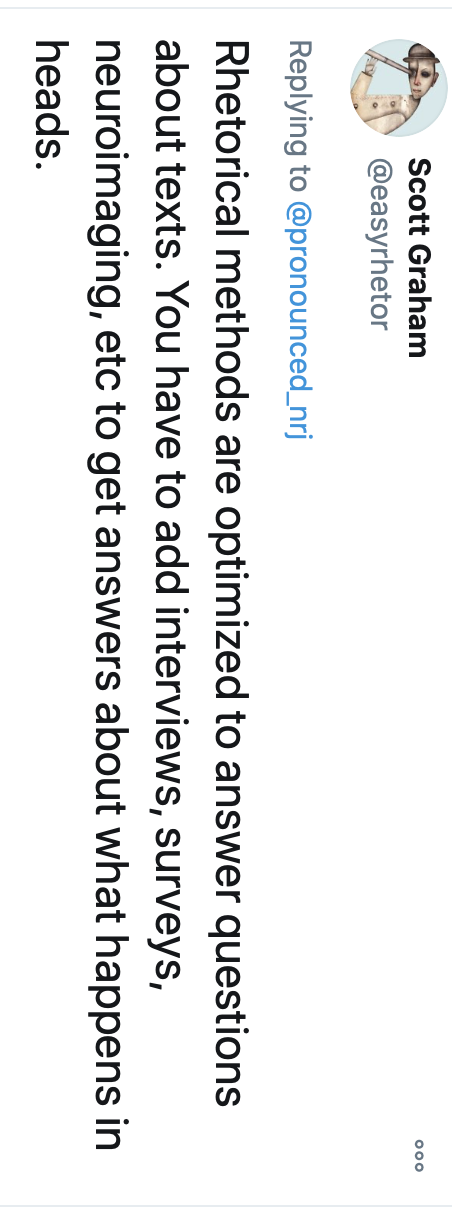
Research questions don’t do all the same things. Some will answer a specific question or address a problem. Others will summarize trends or gaps. Others will generate a theory or conceptual framework that should be tested by others. And still others will may identify assumptions or issues within the previous research on the same topic.
But you need to start with something that you’re interested in. You need to be reading EXISTING published LITERATURE in YOUR FIELD to see where your curiosity intersects or complements and extends that existing work. this is why in the research is not linear diagram there is iteration represented between reading the literature and determine your research question.
While I hate the emphasis on gaps, what I liked about this table is that it does clarify in basic ways sine differences in the types of research and what would be their related questions.
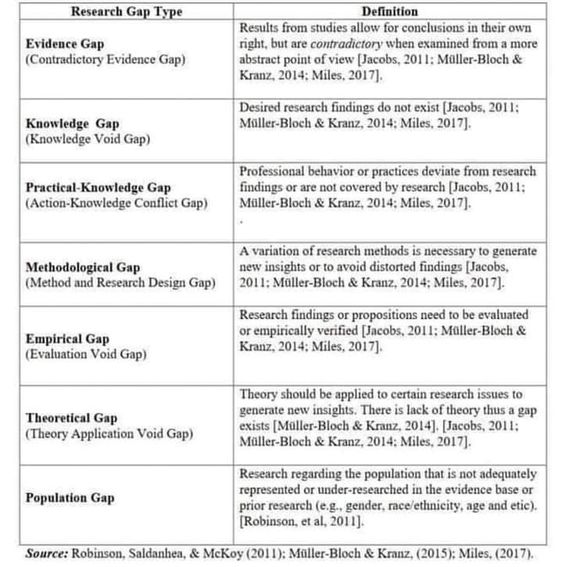
Now should this table be held on to as gospel. No. Absolutely not. But it should get you thinking about the relationship between your curiosity, what you’ve read in your field, what type of question you’re leaning toward. It should be generative in your thinking to get to a researchable question.
For a dissertation or really any research project, you need to like what you’re doing
So what is a researchable question? It’s a question that is narrow enough to guide the research study design in light of the practical parameters that structure the research. This is why the term “narrow” is included. Most often our initial attempts at a research question are too broad and too complex. The process then becomes narrowing down the question to something that can be accomplished in the timeframe that you have available.
One way to think through a big curiosity or interest is to consider what you want your research to do, such as compare, critique, analyze, historicize, describe, evaluate, examine, recover, or solve. These aren’t all things research can do, but thinking in terms of doing, of action, may help you start to take a big idea and narrow it down.
For example, my colleagues and I are currently working on a US national study about a course that is taught at about 75% of all institutions. This course, often referred to as the service course, is likely the second most ubiquitous writing course and one of the most ubiquitous courses in all of higher education. We’ve been planning this project for over a year and are still working out the details of how to gather data that will help answer our general questions. The two big questions are these:
- how are programs and courses putting students and learning at the center of the classroom experience?
- what does it look like in practice to put students at the center of a teaching and learning experience?
You don’t need to be an academic, or wanting to stay in academia, or a program administrator to be able to think through conceptually what these questions are trying to get at. Each of you have insights because you’ve been a student in a classroom. But, these two questions came out of an even bigger question: what is happening in the service course? A literature review pointed out there was not a whole lot of research on the service course. When my colleagues and I consider “what is happening” we realized we need to be more precise. Our first foray into narrowing down the big idea lead us to the a question about student learning outcomes (across the US) and also one where we looked at one aspect of the classroom (a particular assignment at a single institution). These two studies helped us to understand that when we asked what is happening in the service course what we were really interested in was what was happening from a teaching and learning perspective. We still need to narrow down our big questions, but narrowing things down in one way (as noted by the two linked articles) has helped us understand what question we really want answered and then figuring out how to answer it. We can talk more about this example in class.