Component parts
My good friend and colleague, Joanna Schrieber, and I are finishing up a collection that encourages the field of technical and professional communication to move past an impulse to define what the field is and is not. Instead we encourage scholars to consider TPC as a big box that is filled with lots of component parts. Shifting to the view, component parts allow for the diversity of approaches to research and allow for understanding the field through lens of diverse organizations where TPC is practiced, Moreover, it gives scholars (and practitioners) the opportunity to draw on the parts they need at any given moment,. This somewhat modular approach means that arguments can be made about what TPC is and does based on the context.
It was a conversation with Joanna that inspired the exercise that you’ll have coming up on creating Venn diagrams. A venn diagram is a visual way of showing parts of something. In this case, I asked for students to think through how they were seeing the component parts of composition theory, as well as the component parts of the teacher/scholar identity. The latter Venn digram intersects with one my consistent refrains when talking with graduate students: you have to know who you are as a teacher and a scholar. Gaining an understanding of the components of your identity as teacher and scholar can help you with planning and strategizing toward your overall goals and objectives. It helps to give a concrete path forward.
I ran across this Venn digram about life and in general. I share this here because it can add another dimension to the thinking about your own component parts–what are those things that are important to you–of your scholarly trajectory.
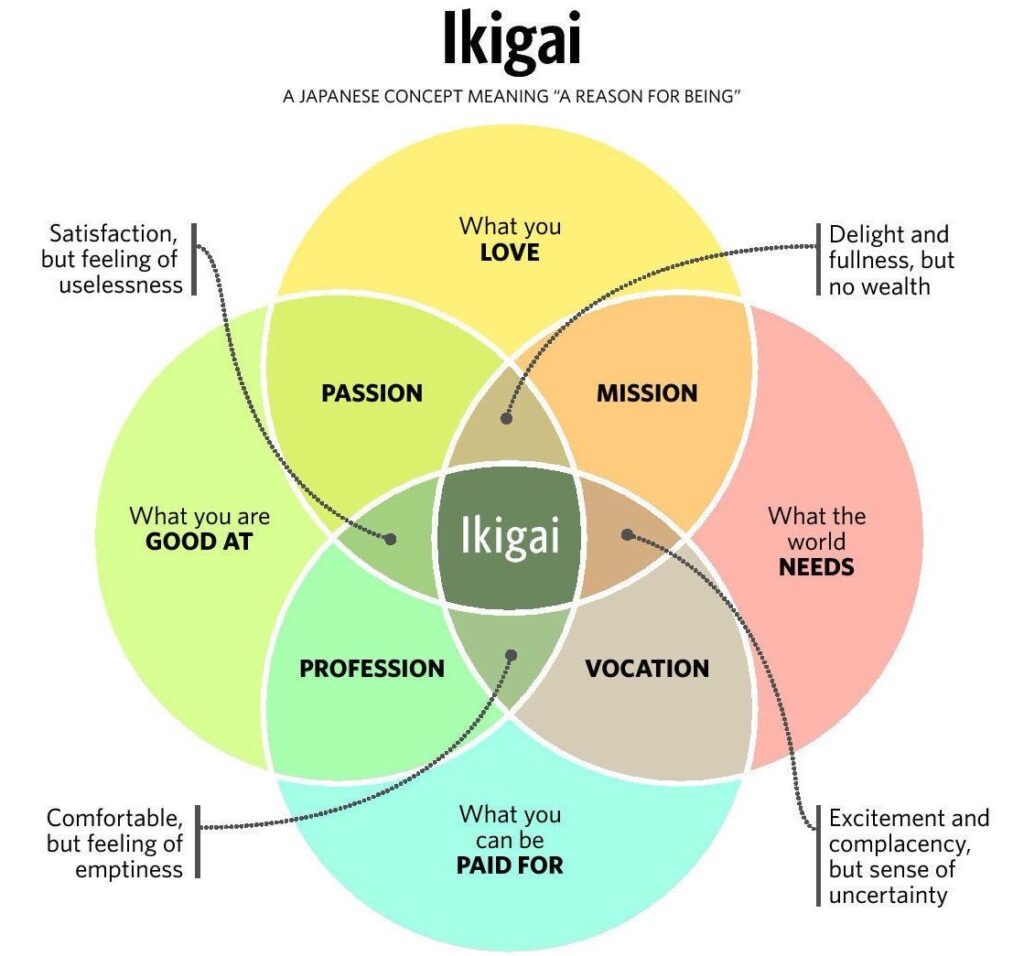
What I like about this are the underlying questions that one an ask themselves as you are pondering your own goals and objectives. A graduate degree is a big step and life changing so it’s important that you are consistently reflective and reflexive along that path.
Here is my own Venn diagram that is similar to what I asked you to create:
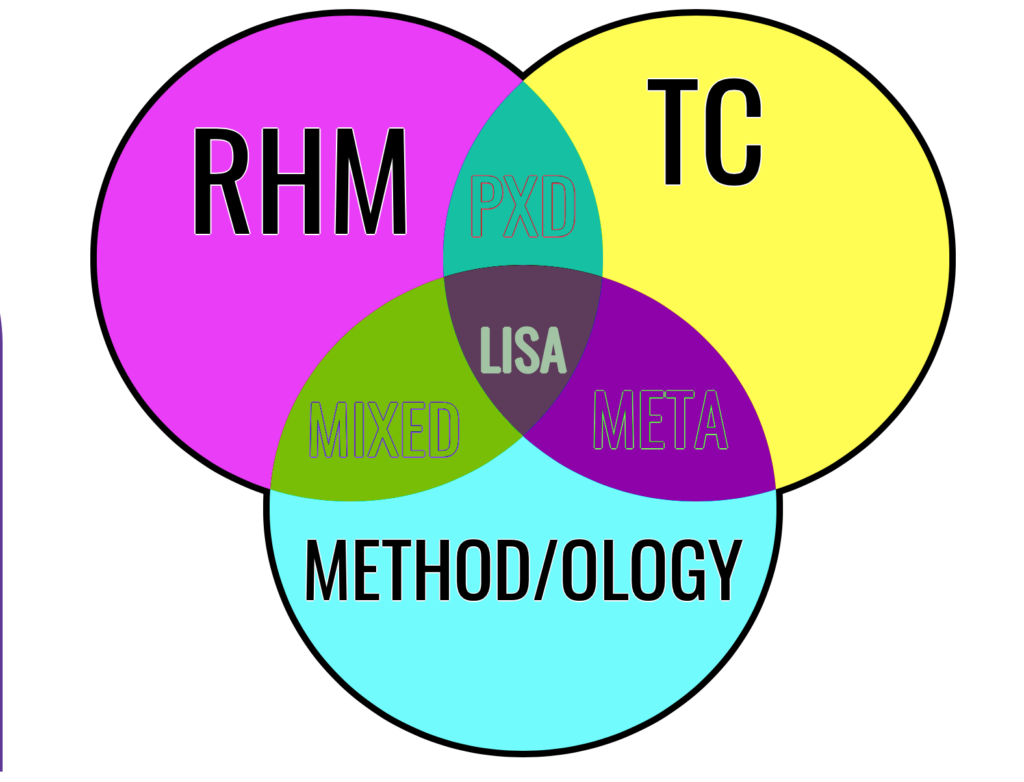
This identifies three major components to my scholar/teacher identity
- technical and professional communication
- rhetoric of health and medicine
- method/ology
The overlaps are key ways that these areas intersect with one another. For example, my work in TPC overlaps with RHM specifically around a concept of patient experience design (PXD).
While TPC and methodology overlap in areas in meta-research where I have looked to establish ways of both seeing the field methodologically while invoking forms of methods that can open up insights into the data about the field. Method/ology overlaps in RHM with mixed approaches to doing research in RHM. I could have chosen any number of ways to do the overlaps. I settled on these because in some ways they highlight the important component parts of not only my own identity, but also those of the fields.